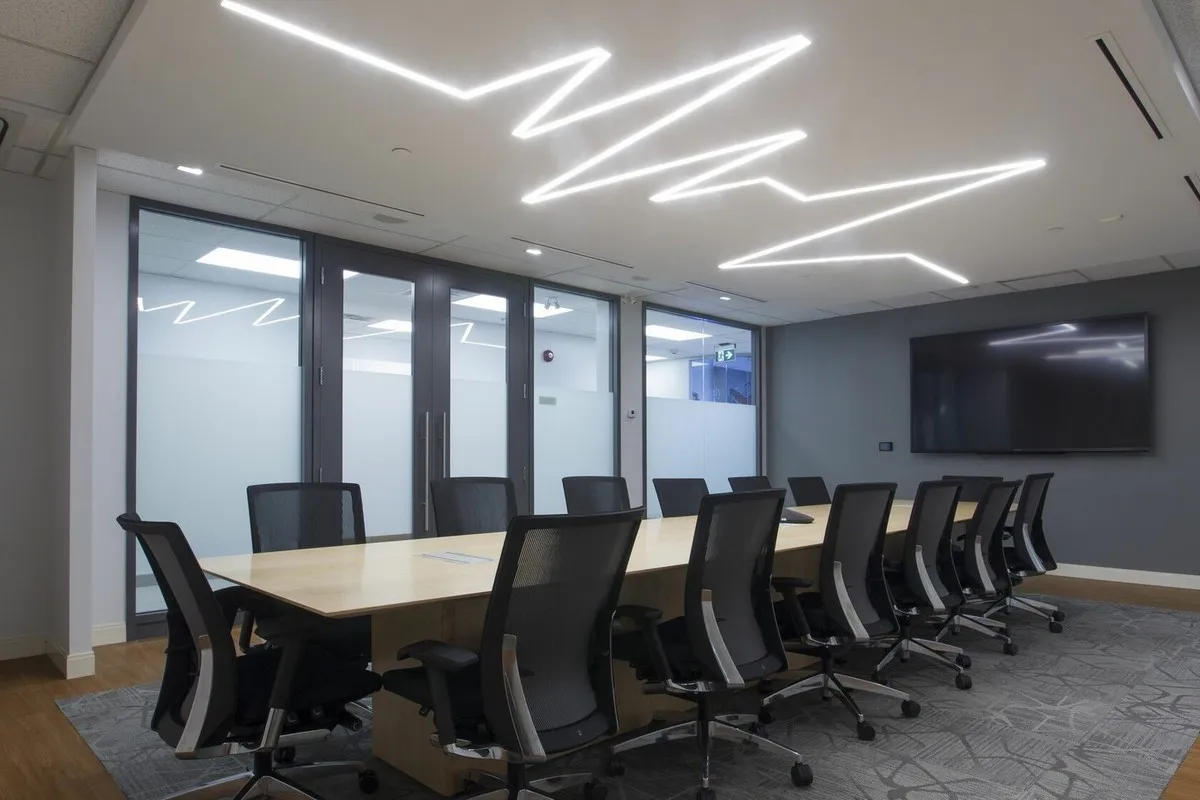
Modern buildings require integrated solutions that simultaneously target energy efficiency and user comfort; this is where the System Lighting approach comes into play. Instead of individual, independent luminaires, creating a smart ecosystem that communicates digitally, is powered by sensors, and is managed by central software, reduces operating costs while enriching the spatial experience. In a System Lighting configuration, the luminaire, driver, control module, and cloud software are all links in a single chain; since data flow is uninterrupted, both maintenance and energy optimization are performed in real time.
The first leg of the technical backbone consists of drivers compatible with DALI-2, KNX, or Bluetooth Mesh protocols. These drivers instantly adjust the luminaire current according to the signal from daylight and occupancy sensors; thus, unnecessary power is not wasted while lux values remain constant in System Lighting areas. High PF (≥ 0.95) and low THD (≤ 15%) parameters protect the building's power quality and extend equipment life. The second leg consists of a modular luminaire family: linears, downlights, and spotlights communicate with each other on the same data line; mechanical disassembly and reassembly can be performed without losing address information, eliminating the need to modify the electrical installation when changing space usage.
At the data layer, operating hours, lumen degradation, and fault alerts are monitored and transferred to the BMS (Building Management System) software via API. This dashboard informs the maintenance team which luminaire needs replacing and when; eliminating the risk of unplanned outages. Furthermore, the heat map obtained from System Lighting data reveals density patterns in the building, contributing to the optimization of even HVAC scenarios.
In terms of sustainability, the use of 90% recycled aluminum in housing materials, lead-free solder, and halogen-free cables earns extra points in green building certifications. The intelligent dim-to-off algorithm completely switches off the lights in empty spaces after midnight, extending LED lifespan and reducing carbon emissions. Ossam Lighting, in this context, enables easy reporting of actual consumption with energy meters integrated into its drivers.
During the installation process, plug-and-play connectors and pre-addressed QR labels shorten installation time by 40% compared to traditional projects. IES/LDT files largely match the lux measurement results obtained on-site; the uniformity foreseen in the design phase is maintained. Furthermore, Ossam Lighting's technical team provides free training to the business after commissioning by creating a digital twin data.
In short, System Lighting combines data-driven management, flexible modularity, and advanced energy efficiency under one roof. Supported by smart protocols, sensor integration, and sustainable materials, this approach not only makes the architecture visible but also dynamic and future-proof. Offering all these advantages on a single platform, Ossam Lighting continues to provide your projects with a long-lasting, scalable, and environmentally friendly lighting ecosystem.
Tags: